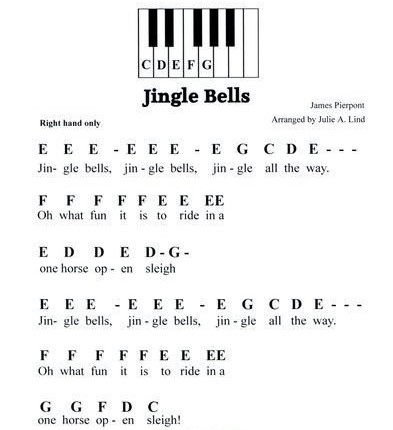

Learn how to play the piano!
Content:
The first thing you need to know is that each note has a name and that the notes are arranged like the English alphabet. We name the notes from A to G and then repeat again from A. These are the names of all the white keys:

The black keys also have names. There are actually two possible names for them, but don't worry too much about the black keys for now - focus on the white keys first. (The symbol “♯” means “sharp” and the symbol “♭” means “without.”)

These 12 notes are simply repeated over and over on the keyboard.
If you're not familiar with the piano, here's a quick way to remember where the notes are:
C is to the left of the groups of two black keys.
F is to the left of the groups of three black keys.
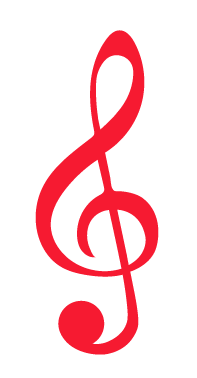
First, let’s look at the beautiful swirl that is the treble clef, which is also called the G-clef. Usually (but not always!), seeing a treble clef means you play that section of music with your right hand. Treble clefs organize high notes (treble = high voice).
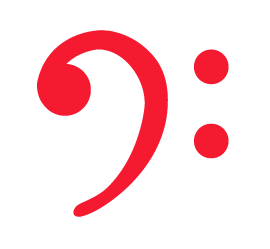
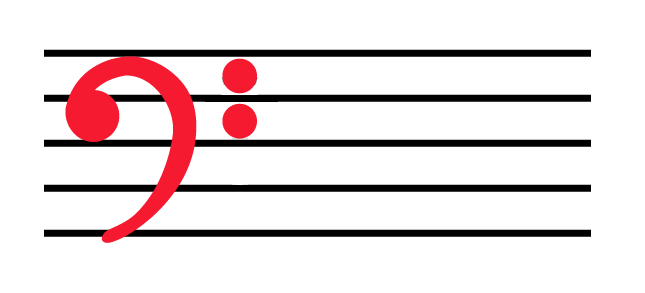
Next, let’s look at the bass clef, which looks like half a heart with two dots. Usually (but not always!), seeing a bass clef means you play that section of music with your left hand. Bass clefs are associated with low notes (bass = low voice).
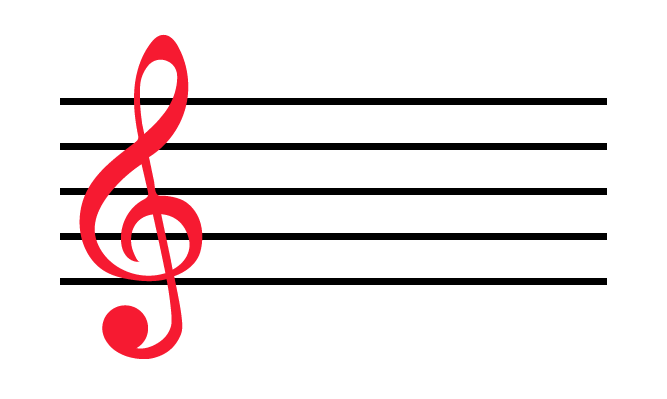
The treble and bass clef sit on five lines with spaces between them. The five lines are called a staff.
In piano music, the treble and bass clef are joined together by a brace. This is called the grand staff:
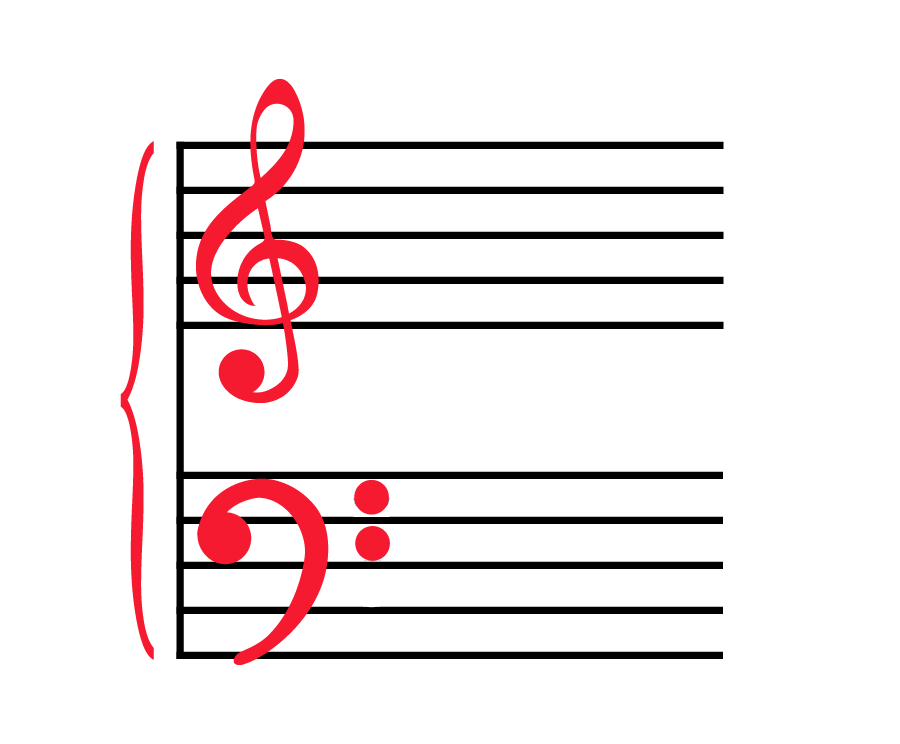
These lines and spaces are where our notes will sit. Notes that sit on higher lines and spaces are higher pitched than notes that sit on lower lines and spaces.
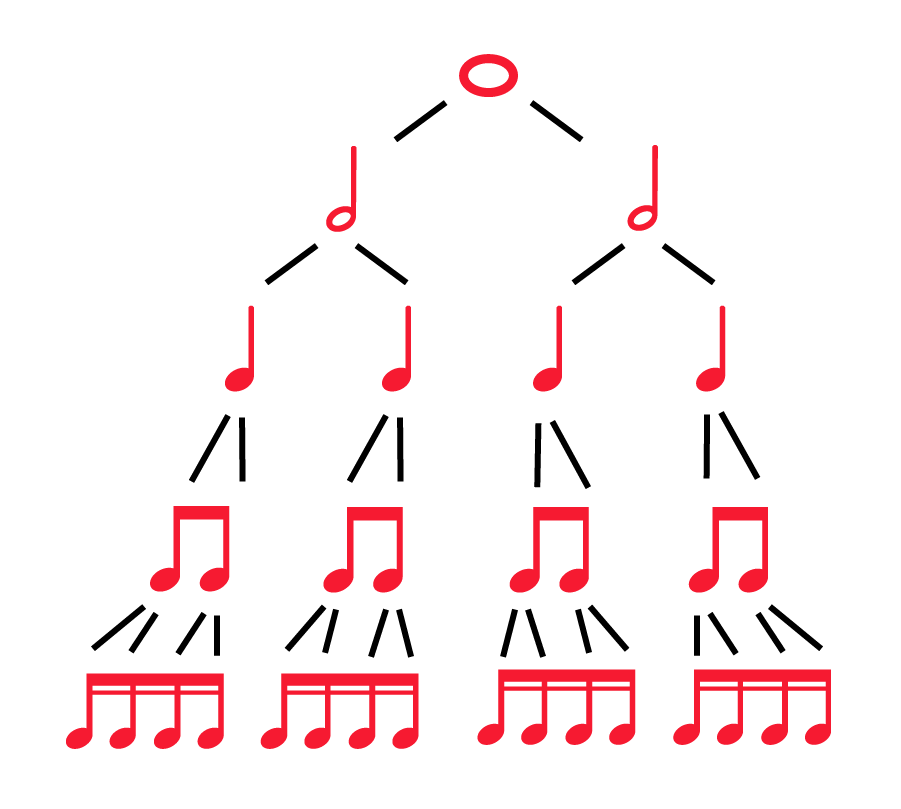
Let’s focus on note values first. The “biggest” note is the whole note. One whole note can be divided into two half notes, and one half note divides into two quarter notes. We can keep dividing notes like this:
Eighth notes and sixteenth notes have flags that can be joined together. This groups the notes to make reading them easier:
Eighth Notes
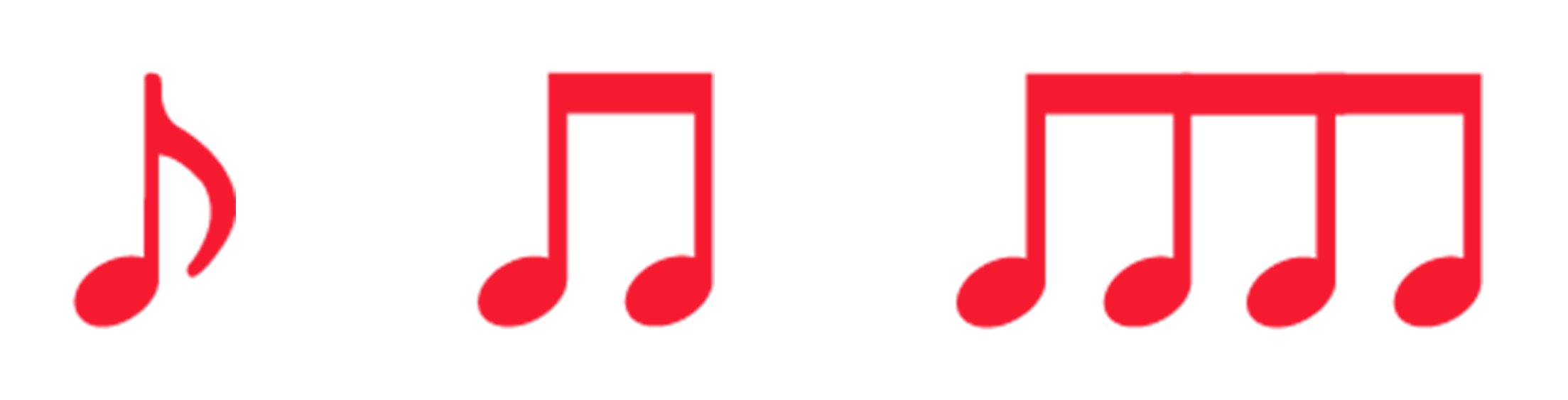
16th Notes

See more information
Choose a song: